
Welcome Is Not a Word. It Is a Practice.
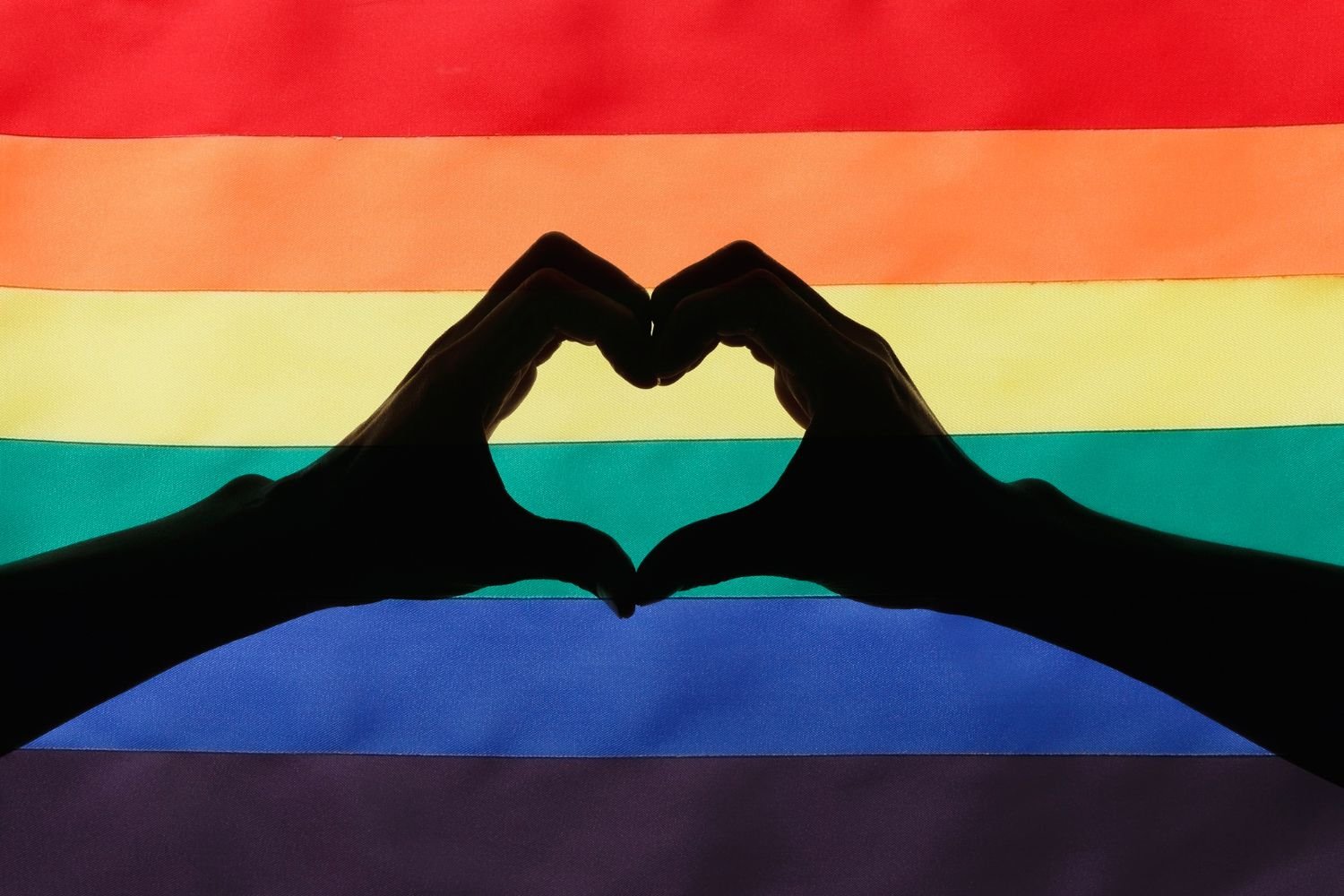
June, businesses and churches all around put up their rainbow flags. Storefronts change their logos. Social media fills up with bright graphics and proud captions.
Then July comes. And churches and places of worship in particular have a choice to make. Do we keep creating posts? Do we keep showing up? Or do we quietly fold the flag away until next year?
Underneath all of that is a bigger question. Are we actually safe, or do we just sound safe? For the LGBTQ+ community, that question is not small. Many have spent years circling spiritual community from a careful distance. It is the first thing they are quietly checking on their way through the door.
At CSLNOCO, we are not a church. We never have been. We are a spiritual community that honors all faith traditions, all lifestyles, and all beliefs. We hold space for people who call themselves spiritual but not religious. We trust that God, the Universe, Spirit, or your Higher Power supports the highest good in every person. Whatever word feels true to you, that trust holds. That is not a slogan for us. It is the ground we stand on.
But even here, words can start to feel hollow. They feel hollow when they are not backed up by something real. So this post is about that gap. It is the space between saying you are welcoming and actually being welcoming. And it is about what we do, every day, to close that gap.
When Words Stop Meaning Anything
“All are welcome” used to mean something. Now it shows up on so many signs and websites that it barely registers. For someone who might be struggling with acceptance from family and friends, that phrase does not answer the real question. For someone who walked into a space that was supposed to be welcoming, only to find out it was not, that phrase does not answer it either. Welcomed to sit in the back, or welcomed to lead up front? Welcomed as long as nobody asks too many questions?
This is not cynicism. It is pattern recognition. People who have been burned learn to read between the lines. They learn to notice the difference between words and follow through. A vague welcome hopes good vibes will speak for themselves. Often, it says the opposite of what it intends. Silence reads as caution. Caution reads as a welcome with conditions attached. And a conditional welcome can feel like a closed door wearing a friendly coat of paint. That is especially true for someone who has already been turned away once.
We see you. We see the courage it takes to walk through a new door. Especially after a place that promised safety did not deliver it. We do not toss around buzzwords and trendy phrases just because they sound good in June. When we say something is true about who we are, it is true. It is true in the small moments nobody is watching. Not just on the days everyone is.
It is easy to create a Pride friendly graphic. It is something else entirely to build a space where everyone is actually welcome, actually safe, actually held.

Why So Many People Have Walked Away
It would be easy to treat this as a small thing. A matter of tone, maybe. An awkward visit before someone quietly decides not to come back. But the numbers tell a deeper story.
A 2024 survey looked at why people leave faith communities. It came from the Public Religion Research Institute and was reported by NPR. Nearly half of people who left a faith tradition pointed to negative teaching about the LGBTQ+ community. They named it as part of the reason they left.
The number was even higher for younger adults. Roughly six in ten Americans under thirty named that teaching as a factor in leaving religion. That is a much higher rate than older adults gave.
Read that again, slowly. This is not a handful of people who simply drifted away. This is a generational pattern. Young adults are the very people most communities say they hope to reach. And they are naming this one thing as a real reason they left. Not the only reason. But a true one, and a common one.
Behind that number are real people. People who sat in real rooms and decided the cost of staying was too high. Some left because of one harsh sermon. But many more left for quieter reasons. It was the slow build up of small signals that they were tolerated, not embraced. Present, but not fully included. Watched, but never quite trusted.
What Exclusion Quietly Looks Like
Exclusion rarely shows up as a slammed door. It usually shows up softer than that, and harder to name. It can look like being invited to attend, but never invited to lead. It can look like a teaching on love and family that quietly assumes who gets to be in one. It can look like a community that talks around the subject, never quite naming it. It never comes up in a way anyone could point to and say, there, that is the problem.
It can also look like being treated as a category instead of a whole person. Someone gets brought up as the “gay member,” as proof of how open minded a community is. That is different from simply being part of a community’s ordinary, unremarkable life. People notice when they are welcomed for show but invisible the rest of the time. That kind of welcome does not feel like belonging. It feels like being used as evidence.
For some in the LGBTQ+ community, this kind of exclusion goes far deeper than discomfort. Feeling judged or quietly pushed aside by a community they once trusted can grow into something heavier. Shame. Self doubt. It can feel like who they are cannot live in the same body as what they believe about the Divine. That is not an exaggeration. It is a real and documented pattern. And it is part of why this conversation matters far beyond what happens on a Sunday morning.
Most of the time, this kind of harm is not intentional. Most spiritual leaders are not trying to push anyone away. But good intentions and real impact are two different things. A community can mean well and still operate on quiet assumptions. Those assumptions can quietly tell certain people they are not fully part of the family. They get baked into whose relationships get celebrated out loud, and whose simply never come up.
What Actually Helps
If vague language does not work, and quiet hoping does not work, what does?
Mostly, it is follow through. Words only carry weight when there is something standing behind them. That absence of follow through is exactly what so many people have learned to watch for. A flag in the window means something different next to a community that only ever talks about inclusion. It means something more next to a community that can point to real relationships and real, ongoing commitment.
This is something CSLNOCO takes seriously, not just something we say. It is why you will find us with a booth at Fort Collins PRIDE every single year. We are not there for a once a year gesture. We are there as a visible, repeated yes. Year after year, in the same place, where people know they can find us. It is also why we regularly feature and support a Pride focused nonprofit. We build a relationship over time, not a single mention buried in a June newsletter.
More than any single event, it is the reason we keep returning to what we actually believe. Every single person, wherever they are on their journey, is welcome here. We hold that as a living standard, not a phrase printed on a banner. A phrase is easy to print. It is harder to live out when it costs something. It might cost a hard conversation, or a member who disagrees. It might mean naming something directly instead of talking around it. That belief only means something on the other side of moments like that, not before them.
None of this means we get it perfect. No community does. The work of fully welcoming people, not just in theory but in practice, never really finishes. But there is a difference between a community that is trying and one that is only talking. That difference is usually visible if you know what to look for. Is there follow through behind the words? Does the LGBTQ+ community show up in our regular, ordinary life? Not just as a feature, but as members, friends, and leaders. Does the welcome feel the same in March as it does in June?

The Heart of It
Pride month tends to put a spotlight on this question. But it is not really a once a year conversation. It is a daily one, made of small moments. How something is worded. Who gets invited to share their story. Whether someone’s questions are met with warmth or with hesitation.
So many in the LGBTQ+ community have circled spiritual community from a careful distance. For them, the real question was never “are you affirming.” It was “can I trust you.” That kind of trust is not built with a flag or a hashtag. It is built the way trust is always built. Slowly. Consistently. Through what happens when nobody is checking.
That is the quieter, less flashy work. But it is the only kind that actually changes whether someone walks through the door and decides to stay. At CSLNOCO, we would rather be known for that kind of welcome. We would rather be known for that than for any words we put on a sign.
Source: NPR, “People say they’re leaving religion due to anti-LGBTQ teachings and sexual abuse,” March 27, 2024 (Public Religion Research Institute survey data).
Join Us in Creating Positive Change
Discover how the teachings of Science of Mind can empower you during life’s transitions. Visit us at Center for Spiritual Living Northern Colorado or attend one of our Sunday services to explore mindfulness, affirmations, and spiritual tools for transformation.