
The Sun Symbol
Giver of Life, Keeper of Balance
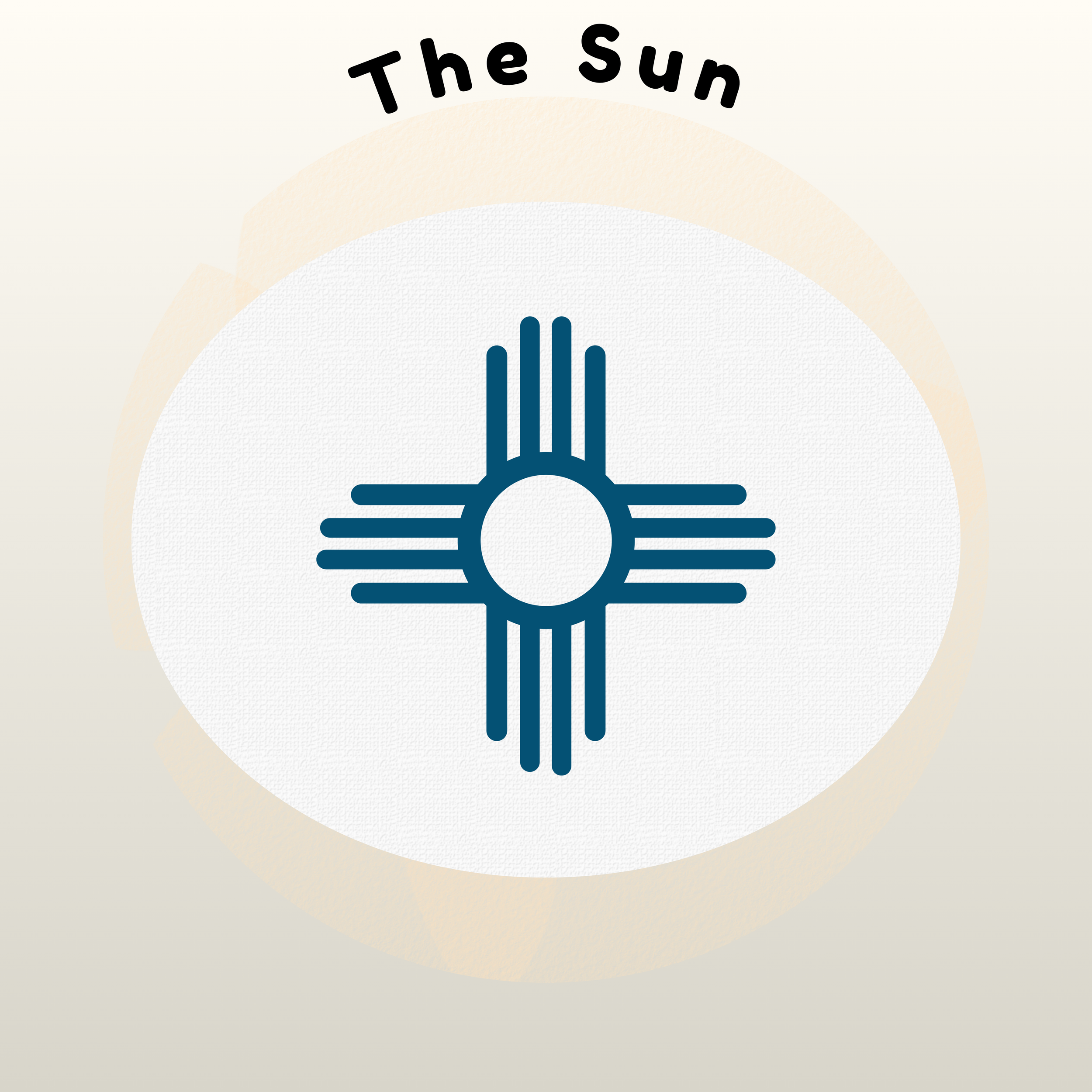
The sun is one of the most important symbols in many Native American cultures. It is truly revered because it is the giver of life, the provider of warmth, light, and crops. The sun symbol often means "Earth Guardian in Day," and it can also represent Healing Energy.
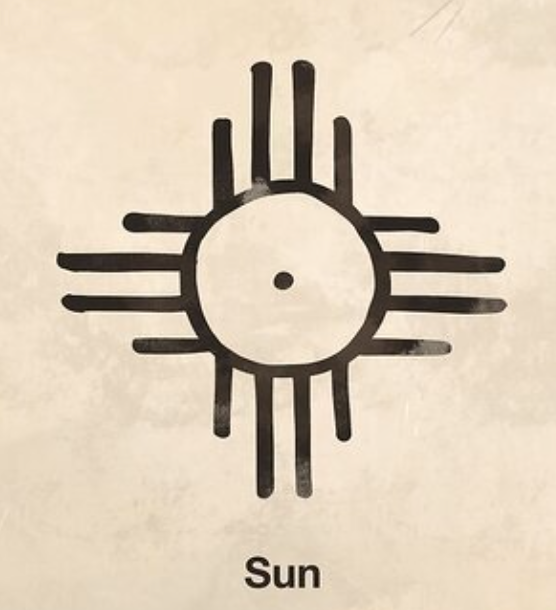
The sun and its rays represent the cardinal directions: North, South, East, and West. It's important to note that Native American symbols, like the sun symbol, can vary in meaning from one tribe to another and across the culture groups of North America. There are many other symbols that represent Native and Indigenous cultures as well.
The History Behind the Symbol
The sun has held sacred meaning across countless Native American cultures for generations, honored as a primary source of life, healing, and growth. Its imagery appears throughout Indigenous art and tradition — in ancient petroglyphs, woven textiles, and ceremonial pottery — though its specific meaning and design vary widely from nation to nation.
Among Pacific Northwest tribes, the sun is often depicted as a radiant face, representing life-giving abundance, healing, and peace. Among the Taíno people of the Caribbean, the sun symbol, known as Sol, represents creation and the eternal energy of one's ancestors. Across the Southwest, many nations incorporate the number four into their sun imagery — echoing the four cardinal directions, the four seasons, and the four stages of life.
What the Symbol Teaches Us
The sun reminds us of our dependence on forces far greater than ourselves — the light, warmth, and cycles that sustain all life. It teaches balance, echoed in the repeating fours found in many Indigenous traditions: the seasons, the directions, the stages of a life well lived. And it calls us toward gratitude and humility, reminding us that the resources and traditions that sustain a community are worthy of protection, respect, and honor — both from within that community and from all who encounter them.
One of the most widely recognized Native American sun symbols — the four-rayed design associated with the Zia Pueblo of New Mexico — carries a difficult history worth acknowledging. The symbol was taken from Zia pottery and placed on the New Mexico state flag in 1925 without the consent of the Zia people, during a period when Indigenous nations had little legal standing to protect their sacred and cultural property. In 2012, a joint memorial between the state and the Zia people formally acknowledged that the state had appropriated the image without permission.
Because the symbol has been in public use for decades, it cannot be trademarked by the Zia Pueblo, though in 2014 the National Congress of American Indians passed a resolution recognizing the Zia Pueblo's cultural property rights to the design. Tribal leaders have continued to seek formal compensation and a public apology from the state for its unauthorized use, and the U.S. Patent and Trademark Office has begun weighing tribal interests more closely when reviewing new applications involving the symbol.
We share this history not to discourage appreciation of Native American symbolism, but to honor it rightly — recognizing that sacred images carry weight, ownership, and living significance to the communities who created them.
A Note on the Zia Sun Symbol
Explore more of the sacred symbols that inspire our community, or join us at CSL NOCO to experience these teachings in practice.