
The Om Symbol
One Syllable, Infinite Being
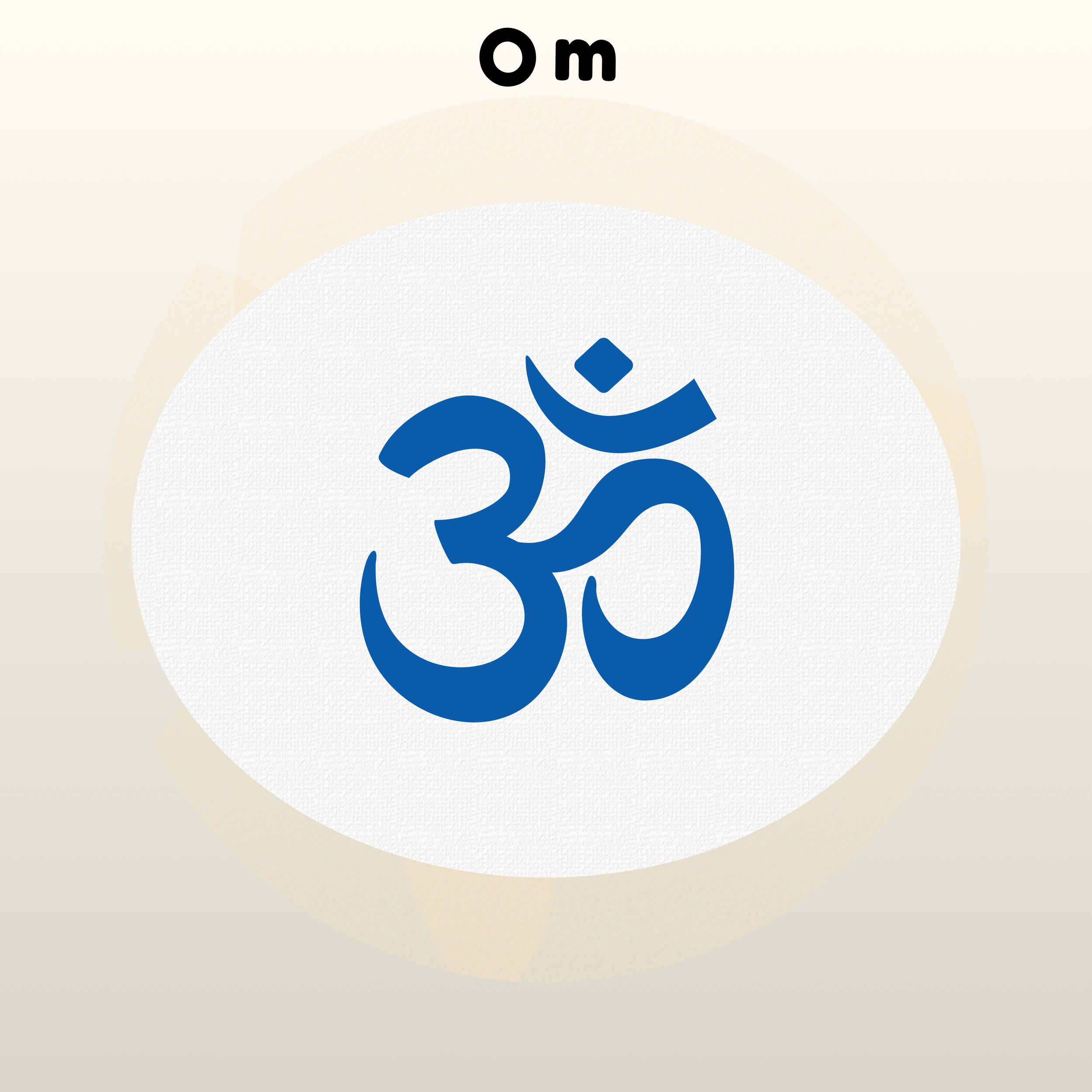
Om (also written as Aum) is a sacred syllable and symbol in Hinduism. It is considered the primordial sound — the vibrational essence from which all creation emerges.
The symbol's curves and elements represent different states of consciousness: waking, dreaming, deep sleep, and the transcendent awareness that underlies them all. When chanted, Om is said to align body, mind, and spirit with universal reality. More than a sound, Om expresses unity, wholeness, and the interconnected nature of all life.
Om's roots trace back over 5,000 years to the Rig Veda, one of Hinduism's oldest sacred texts, where it is described as the cosmic sound of creation itself. The philosophy of Om was later expanded significantly in the Mandukya Upanishad, which maps the sound directly onto the structure of human consciousness and its relationship to the absolute soul. The written symbol familiar today, ॐ, rendered in the Devanagari script, came into widespread use in manuscripts and temple inscriptions around the 6th century.
The syllable itself is built from three sounds — a, u, and m — which in Sanskrit blend into the single sound "o." These three sounds are traditionally understood to represent several sacred triads at once: the three worlds of earth, atmosphere, and heaven; thought, speech, and action; the three gunas, or qualities of matter — goodness, passion, and darkness; and the three foundational Vedic scriptures, the Rigveda, Yajurveda, and Samaveda. In this way, Om is understood to mystically embody the essence of the entire universe.
The History Behind the Symbol
The Philosophy Behind the Symbol
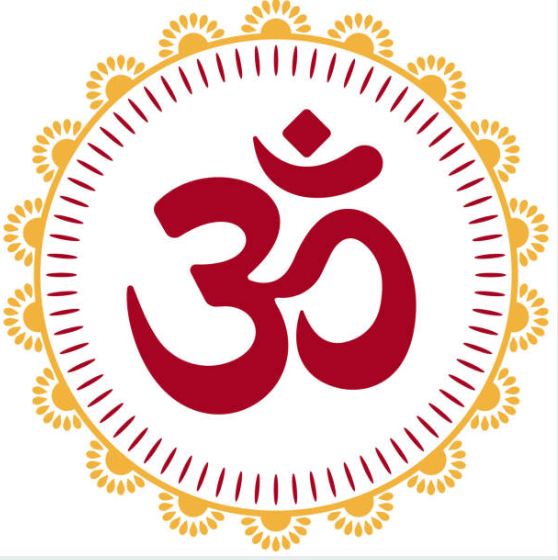
The visual symbol of Om is often described as a precise map of human consciousness and the journey toward spiritual enlightenment. Each part of the symbol carries specific meaning:
The lower curve represents the waking state (Jagrat), where the mind experiences the outer material world through the senses.
The middle curve represents the dream state (Swapna), where the mind turns inward toward memories, desires, and dreams.
The upper curve represents deep sleep (Sushupti), an unconscious state of peace beyond desires or dreams.
The crescent represents illusion (Maya), the veil of worldly distraction that separates the ego from ultimate truth.
The dot represents the transcendent state (Turiya) — absolute peace, pure consciousness, and oneness with the Divine.
To reach that highest state of consciousness, represented by the dot, a practitioner must move beyond the three everyday states of the mind represented by the curves. The crescent is deliberately placed as an open barrier between the curves and the dot, symbolizing that one must look past the illusions of the material world to reach spiritual liberation, or Moksha.
Explore more of the sacred symbols that inspire our community, or join us at CSL NOCO to experience these teachings in practice.