
Dharma Wheel
The Circle of Awakening
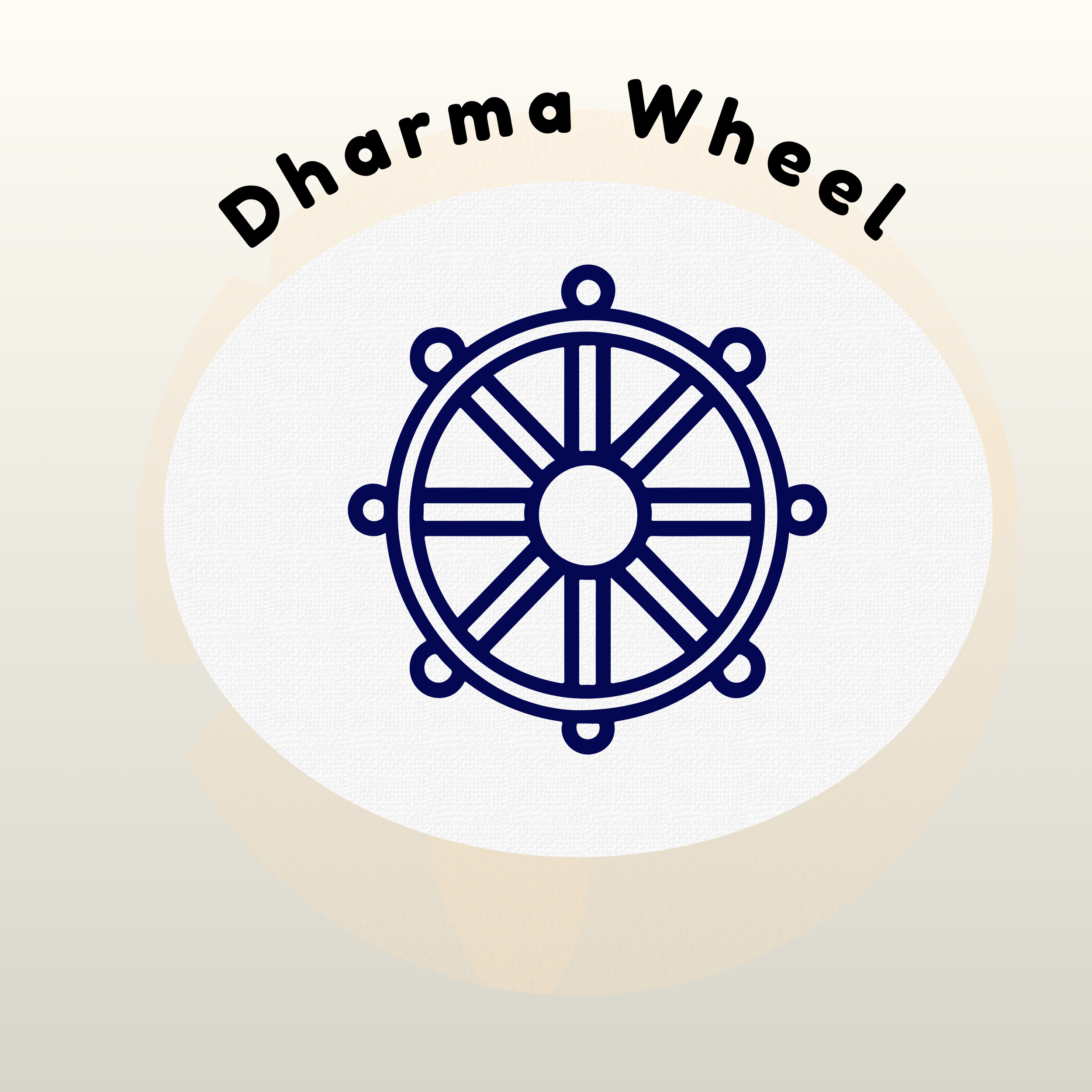
The most recognized symbol in Buddhism is the Dharma Wheel, or Dharmachakra — a wheel with spokes that represents the cycle of life, the path to enlightenment, and the perfection of the Buddha's teachings. The wheel has three basic parts: the hub, the rim, and the spokes, each carrying its own meaning. The hub represents moral discipline and inner focus; the rim represents the meditative concentration and mindfulness that hold the practice together; and the spokes represent the path itself.
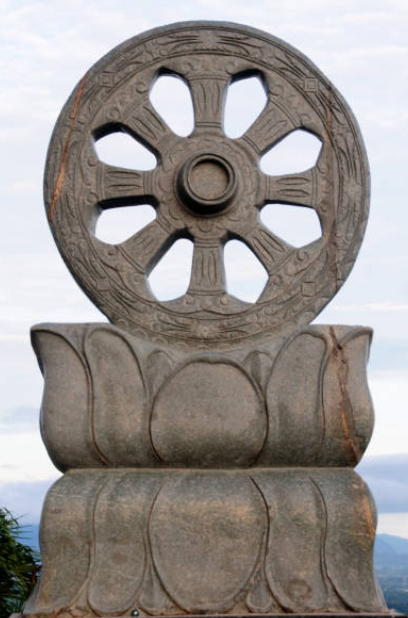
Most dharma wheels have eight spokes, symbolizing the Noble Eightfold Path — the guide toward wisdom, ethical living, and mental discipline. "Turning the wheel" is a metaphor for spreading the Buddha's teachings and for each individual's ongoing progress along the spiritual path. Other Buddhist symbols, like the lotus flower, the Bodhi tree, and the endless knot, carry this same spirit forward — reminders of purity, awakening, and the interconnectedness of all life.
The History Behind the Symbol
The Dharma Wheel is one of the oldest symbols in Buddhism, with roots in ancient India. It represents "the turning of the wheel of the dharma," a phrase tied to the moment the Buddha delivered his first sermon in the Deer Park at Sarnath, shortly after his enlightenment. According to tradition, the sermon was given to five mendicants — and, as legend has it, a herd of deer gathered to listen as well. That story is why the wheel is sometimes depicted flanked by two deer resting on either side of a lotus pedestal, a tableau still found in Buddhist art today.
The number of spokes on a dharma wheel carries its own significance. Eight spokes, the most common form, represent the Noble Eightfold Path. Four spokes — a rarer form — represent either the Four Noble Truths or the four stages of meditative absorption. Ten spokes represent the ten directions, effectively signifying "everywhere." Twelve spokes represent the Twelve Links of Dependent Origination, the Buddhist teaching on the chain of causation that binds beings to the cycle of rebirth. A wheel with twenty-four spokes — sometimes called the Ashoka Chakra — doubles that number to represent both those twelve links and their reversal, the path to liberation from samsara. And wheels with thirty-one spokes represent the thirty-one realms of existence described in ancient Buddhist cosmology.
Among the oldest surviving examples of the dharma wheel are those carved into the pillars of Emperor Ashoka the Great, who ruled much of ancient India in the third century BCE. A devoted patron of Buddhism, Ashoka helped spread its teachings widely throughout his empire — without ever forcing the faith on his subjects. In Mahayana Buddhism, tradition holds that the Buddha "turned the dharma wheel" three separate times throughout his teaching life, each turning representing a deepening of the teachings offered to the world.
What the Symbol Teaches Us
The Khanda reminds us that faith is not meant to be lived passively — it calls for both devotion and action. The central sword teaches that truth must be pursued with clarity and courage, cutting through confusion and doubt. The circle reminds us that we are part of something without beginning or end, bound to one another in a unity that transcends caste, background, or belief. And the two curved swords hold up a balance many spiritual paths ask of us: to tend to our inner life while remaining engaged and responsible in the world around us. To live by the Khanda is to hold justice and compassion together — protecting others, serving freely, and standing firmly for what is right.
Explore more of the sacred symbols that inspire our community, or join us at CSL NOCO to experience these teachings in practice.